
A deck that looks ready for oil may need more than a fresh coat. If the timber is faded or water soaks in instead of beading on the surface, a deck oiling service Moe homeowners can rely on should start by checking the deck’s condition, not reaching for a tin.
Weathered boards can make an outdoor area look tired, but it is not always obvious whether they need cleaning, sanding or another kind of preparation before oiling. Applying oil over dirt or a worn surface can affect the finish, so the right next step depends on the timber and what is already on it.
This guide covers signs your deck may need oil, how preparation and oiling can work, and how to plan around Moe’s changeable weather. It also compares oil with stain and paint, and explains what to expect from an assessment. Dean handles quotes, assessments and on-site work personally, helping you understand the job and plan a careful refresh.
Key Takeaways
- Oiling refreshes and treats timber, but it won’t fix loose or damaged boards. Check whether the deck needs repairs or attention before choosing a finish.
- Preparation depends on the timber, its existing finish and its condition. A suitable surface is essential for a careful refresh.
- Oil, stain and paint differ in appearance and upkeep. Compare the options against the look and maintenance you want.
- Move furniture, pots and everyday items from the work area to make access easier before the job begins.
- A deck oiling service Moe homeowners can plan with confidence starts with a direct assessment and a free quote from Dean.
When does a deck in Moe need oiling rather than a different repair?
Faded colour, dry-looking boards and an uneven appearance are common signs that a timber deck may need attention. They are useful prompts to take a closer look, but they do not confirm that oil is the right treatment. Oiling is a timber finish treatment that can refresh the surface and help protect the timber. It won’t secure loose boards, remove splinters or repair damage.
Sun, rain, shade and foot traffic can affect different parts of a deck in different ways. In Moe, a sunny section may fade while a sheltered spot stays darker or holds grime. If water soaks into the timber rather than beading on the surface, the existing finish may need attention. Inspect the whole deck to work out whether it needs cleaning, preparation, oiling or a different response.
What signs suggest the timber may need attention?
Look for colour loss, patchy areas and boards that appear dry or tired. Note where these changes occur and whether the area gets more sun, rain or foot traffic. A pattern across the deck gives a clearer picture than one faded patch. Appearance is a starting point, not a diagnosis: the timber, previous finish and surface condition all influence which treatment is suitable.
Oiling is one part of the broader wood finishing process, which can include preparation and other types of finish. The right approach depends on what is already on the deck and how the boards have weathered.
When is oiling not the first step?
Loose boards, movement underfoot, splinters or visible damage need closer assessment before any finish is applied. Oil won’t correct these issues, and coating a dirty or poorly prepared surface can affect the result. Cleaning or other preparation may be needed first. The work should suit the deck’s condition, not just its colour.
Structural concerns need to be assessed separately from oiling. A deck oiling service Moe homeowners arrange should begin with an inspection of the surface and any concerns that could affect the work. Dean handles the assessment personally and can explain the preparation and finish suited to the deck.
How deck oiling works: assessment, preparation and finish
A careful deck refresh follows a clear order: assess the boards, prepare the surface, apply a suitable treatment, then allow it to dry in appropriate conditions. The steps vary by deck. Timber type, existing finish and visible wear all affect the preparation required.
What happens during a deck assessment?
The assessment looks at the deck’s surface, visible wear and any finish already on the timber. It also considers how the boards are used and exposed. A sunny, high-traffic walkway may show different wear from a shaded corner with less foot traffic. These details help shape a practical work plan.
An assessment sets a realistic scope; it does not promise a particular colour. The existing finish and condition of the timber influence how a new treatment may look. With a deck oiling service Moe homeowners can discuss the work directly with Dean, who handles the assessment and on-site job himself.
Why do cleaning and preparation matter?
Dirt, grime and loose surface material can get in the way of an even finish. Applying oil before the boards are properly prepared may leave patchy results or affect how the treatment sits on the timber. The aim is a clean, suitable surface, not simply to cover what is already there.
Preparation depends on the deck. One may need thorough cleaning, while another may need extra attention to its existing coating or surface wear. The approach should match the timber and what the assessment reveals, rather than follow a fixed routine.
Once the surface is ready, the selected treatment is applied as planned. The deck then needs suitable drying conditions before it returns to normal use. Rain or damp weather in Moe can affect when work proceeds and how drying is managed. Timing depends on the conditions and the treatment, so plan around the actual job rather than assuming every deck follows the same schedule.
Dean explains the proposed preparation and finish as part of a deck oiling assessment, so you know what the work involves before it begins.
Deck oil, stain or paint: which finish suits your deck?
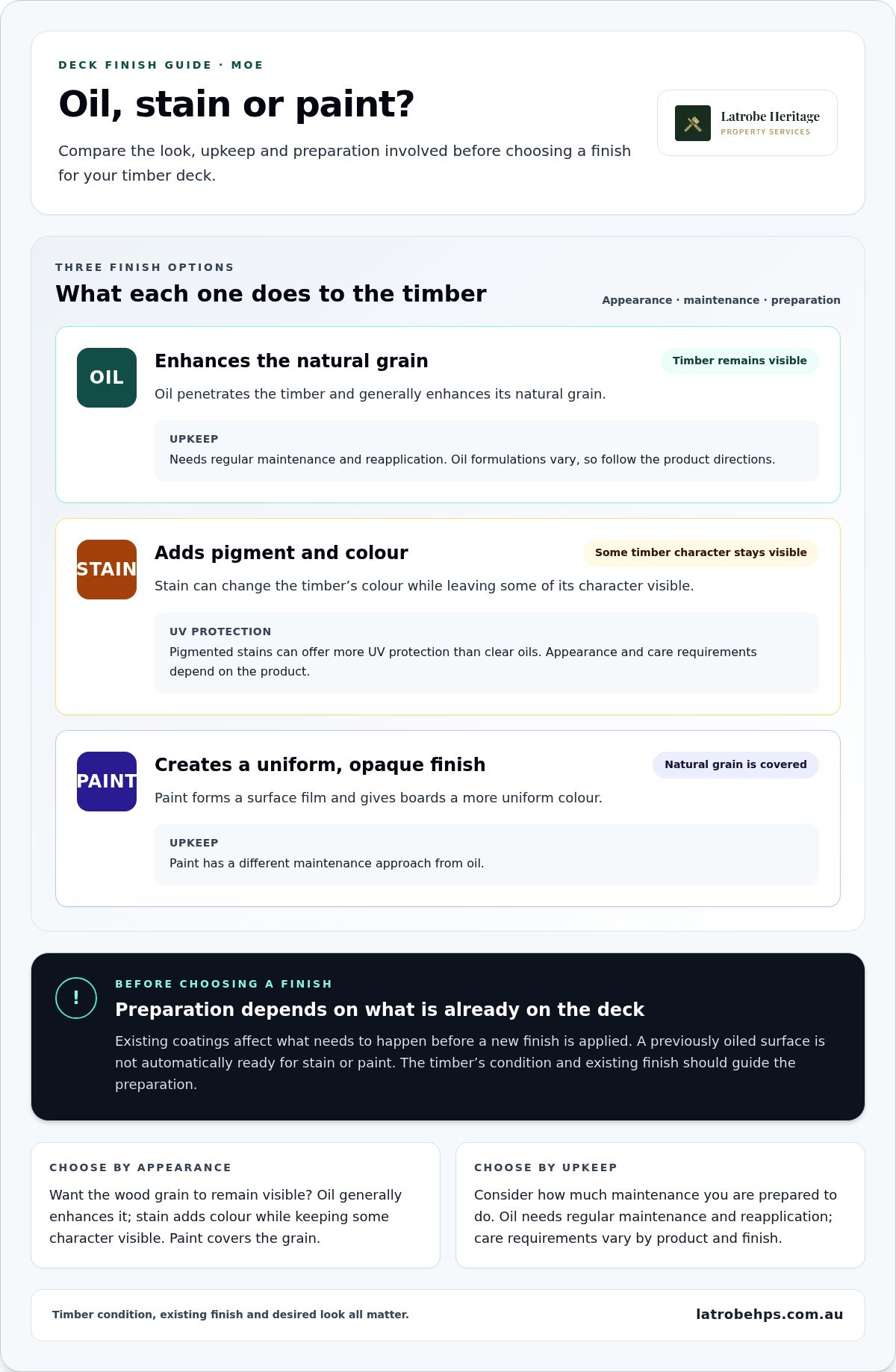
The right finish depends on the look you want, what is already on the boards and how much upkeep you are prepared to do. Oil, stain and paint behave differently on timber. None is right for every deck, and changing from one finish to another may require different surface preparation.
How does deck oil differ from stain or paint?
Oil penetrates the timber and generally enhances its natural grain. It suits owners who want the wood to remain visible, but it needs regular maintenance and reapplication. Formulations vary, so follow the product directions rather than assuming every oil behaves the same way.
Stain adds pigment and can change the timber’s colour while leaving some of its character visible. Pigmented stains can offer more UV protection than clear oils, though appearance and care requirements depend on the product. Paint forms a surface film and gives boards a more uniform, opaque colour, covering the natural grain. It also has a different maintenance approach from oil.
Preparation matters for all three. The existing coating affects what needs to happen before a new finish can be applied. A previously oiled surface is not automatically ready for stain or paint, so choose a treatment based on the deck’s condition, not just its label or a colour sample.
How should you choose a finish for a Moe property?
Start with your priorities. Do you want to see the grain? Are you comfortable maintaining an oil finish? Would you prefer a more pigmented or uniform appearance? Then consider the deck itself: its timber, existing coating and exposure to sun, rain and shade.
Even one deck can weather unevenly. Exposed boards may fade differently from shaded sections, while busy areas can show more wear. Those differences affect both finish choice and preparation. A treatment that suits one part of a property may not suit every deck.
For a deck oiling service Moe homeowners can plan with confidence, the finish recommendation should follow an assessment of the boards. Dean considers the timber’s condition and existing finish before setting out the work. That grounds the decision in the deck itself, rather than a universal rule or a promise of an exact colour.
How to prepare for deck oiling and care for the finish
A clear work area makes it easier to reach the boards and carry out the job carefully. Before your deck oiling service Moe appointment, take a few simple steps to prepare the space. You don’t need to do the surface preparation yourself unless that is part of the agreed plan.
What can you do before the service?
- Move loose furniture and pots. Clear the deck where practical, including outdoor chairs, planters and toys.
- Make access clear. Move everyday items from walkways and note any boards or spots you want looked at.
- Keep pets and household activity away. Arrange to keep the work area clear while the job is under way.
Clear access helps the person doing the work reach the full surface, spot areas that need attention and avoid working around obstacles. If a heavy item is difficult to move, mention it when discussing the job so the plan can account for it.
How do you maintain an oiled deck?
After the work, follow the project-specific guidance on drying, foot traffic and when to return furniture and pots to the deck. These details depend on the treatment and conditions during the work. Do not assume the surface is ready after a set number of hours; follow the instructions provided for your deck.
Ongoing care can be simple. Sweep away leaves and loose dirt, and deal with spills or grime before they build up. Check the boards from time to time, especially in exposed areas and along busy paths. Look for changes in colour or finish, and note whether particular sections weather faster than others.
There is no single re-oiling timetable for every deck. Sun exposure, rain, foot traffic, the timber and the condition of the finish all affect when it may need attention. Regular checks help you respond to what the surface shows rather than recoat by habit. If you are unsure what your deck needs, Dean can assess its condition and explain a suitable care approach.
To prepare for a deck refresh in Moe, arrange a free deck oiling quote and discuss access, surface condition and the work involved.
Book a deck oiling service in Moe with direct, local care
A straightforward service starts with a conversation about the deck. Share the property location, what you have noticed and any areas of concern. Dean assesses the deck, prepares a free quote and explains the proposed scope before work begins. If you proceed, he completes the on-site work himself, with no subcontractors. You deal directly with the person doing the job from assessment through to completion.
What should you expect from a deck oiling quote?
The quote is based on the deck’s condition and the work required, not a one-size-fits-all price. It sets out the agreed scope so you can understand the preparation and treatment involved. Dean handles the assessment and quote personally, giving you a direct conversation about the boards and planned work. Pricing is transparent, so you can see what is included.
A clear scope also keeps expectations grounded. If the assessment shows that cleaning or extra preparation is needed before applying a finish, that can be discussed as part of the proposed work. The finish depends on the timber and its condition, so the quote covers the work required rather than promising an exact colour or lifespan.
Arrange deck oiling in Moe
To get started, share the property location and describe the deck’s condition. Mention faded or patchy boards, an existing coating or areas that receive heavy use. These details help focus the assessment. Latrobe Heritage Property Services covers Moe and surrounding Latrobe Valley towns, including Churchill, Traralgon, Morwell and Boolarra, and the business is fully insured.
Dean handles the assessment, quote and on-site work personally. You deal directly with the person doing the job and receive a clear scope and transparent pricing before work proceeds.
Request a free deck oiling quote and discuss your deck with Dean. A deck oiling service Moe homeowners can plan with confidence begins with an honest assessment of the timber and a clear understanding of the work involved.
Give your Moe deck a careful refresh
A careful refresh starts with the deck itself. Fading or dry-looking boards can signal that the finish needs attention, but loose or damaged boards call for a different response. Assessment and preparation help determine whether oil suits the timber and what work is needed before applying a finish.
With a deck oiling service Moe homeowners can plan around their deck’s condition, Dean personally handles the quote, assessment and on-site work. You’ll receive transparent pricing and a free quote for a fully insured service across Moe and surrounding Latrobe Valley towns.
Share where your property is and what you have noticed on the deck. Dean can assess the work and explain the proposed scope clearly. Request a free deck oiling quote to take the next step towards a well-cared-for outdoor space.
Frequently Asked Questions
How do I know if my deck needs oiling?
Faded colour, dry-looking boards or water soaking into the timber can signal that the finish needs attention. These signs do not confirm that oil is the right treatment. Dirt, an older coating or damage may also affect the surface. Compare sunny, sheltered and well-used areas, then have the deck assessed. The timber’s condition and existing finish help determine whether cleaning, preparation or oiling is the appropriate next step.
Can you oil a deck that has already been stained or painted?
The existing coating and its condition determine what preparation is needed before oil can be considered. Oil may not suit a surface that still has stain or paint on it, so do not assume it can simply be applied over the top. The deck may need extra preparation to create a suitable surface. An assessment of the timber and current finish helps establish a practical scope without promising a particular colour or result.
How much does deck oiling cost in Moe?
The cost depends on the deck’s size, condition and preparation needs, so a deck oiling service Moe quote should reflect the actual job. A straightforward refresh and a deck needing more extensive preparation involve different work. Dean provides free quotes with transparent pricing and explains the proposed scope before work begins. He assesses the deck and prepares the quote himself, so you can understand what is included rather than rely on a generic estimate.
How long does deck oiling take?
There is no set timeframe for every deck. The area, condition, preparation required and drying conditions all affect the schedule. Cleaning or extra surface preparation can add to the work, while local weather may influence when the finish can be applied and allowed to dry. Dean can explain the expected work plan after assessing the deck. Follow the project-specific guidance rather than assuming every job takes the same time.
What happens if my deck has loose or damaged boards?
Loose or damaged boards need attention before oiling can be treated as the next step. Oil is a timber finish, not a fix for movement, splinters or damaged boards. Point out any areas that feel unstable or look worn during the assessment. Dean can assess the deck and explain how those concerns affect the proposed scope. Structural issues need to be addressed appropriately; applying a finish alone won’t resolve them.
How often should a timber deck be oiled?
Oiling frequency varies with the timber, exposure, use and condition of the finish. As a general guide, timber decks in Victoria may need oiling around every 12 months, while some dense hardwoods may go longer between treatments. A deck in strong sun may need attention sooner. These are guides, not a fixed schedule for every Moe property. Check how the finish is holding up and follow the care instructions for your specific project.
Can I use my deck straight after it has been oiled?
No, wait until the finish is suitably dry before walking on the deck or returning furniture and pots. The time needed depends on the treatment and conditions during the work, so there is no reliable one-size-fits-all waiting period. Follow the project-specific instructions you are given, including guidance for foot traffic and replacing items. This helps avoid disturbing the finish while it dries and lets you plan when to use the outdoor area again.