
Last Tuesday, David in Churchill walked outside to find fifty metres of paling fence flattened by a single Gippsland gust. It is a frustrating, stressful sight for any homeowner. You worry about the dog escaping, the neighbours looking in, and the sudden, unbudgeted cost of a total replacement. You want honest answers, not a sales pitch. You need a plan that actually works.
A leaning fence is not always a write-off. Local knowledge of our heavy clay soils and high winds makes the difference between a quick fix and a lasting solution. This guide provides a professional checklist for timber fence repair Churchill residents can use to assess their damage and secure their boundaries. We don’t do corporate fluff. We don’t cut corners. We provide steady, dependable advice.
You will learn how to spot a salvageable post, how to temporarily secure a gap for your pets, and how to weigh up repair costs against a new build. It is a straightforward, step-by-step approach to getting your property back to its best. Safe. Private. Solid.
Key Takeaways
- Spot immediate hazards, assess soil movement, and keep your family secure.
- Use the “Post Shake Test” to decide if timber fence repair Churchill is possible or if the structure is too far gone.
- Learn how to document damage and clear your site properly for a faster, more accurate quote.
- Protect your timber against Churchill’s heavy soil with concrete plinth boards and smart drainage.
- Avoid the run-around of call centres by dealing directly with a local who handles every repair personally.
Post-Storm Assessment: The Timber Fence Safety Checklist
Once the Gippsland winds die down, the real work begins. Don’t just check the fence from your back porch. You need to get close. Walk the entire length of the boundary. Look for the small signs of failure before they turn into a collapsed mess. For homeowners facing significant damage, specialists like TBC Restoration provide essential property recovery services to ensure everything is returned to its original state. A quick inspection now saves a massive headache later. It is about being thorough, honest, and methodical.
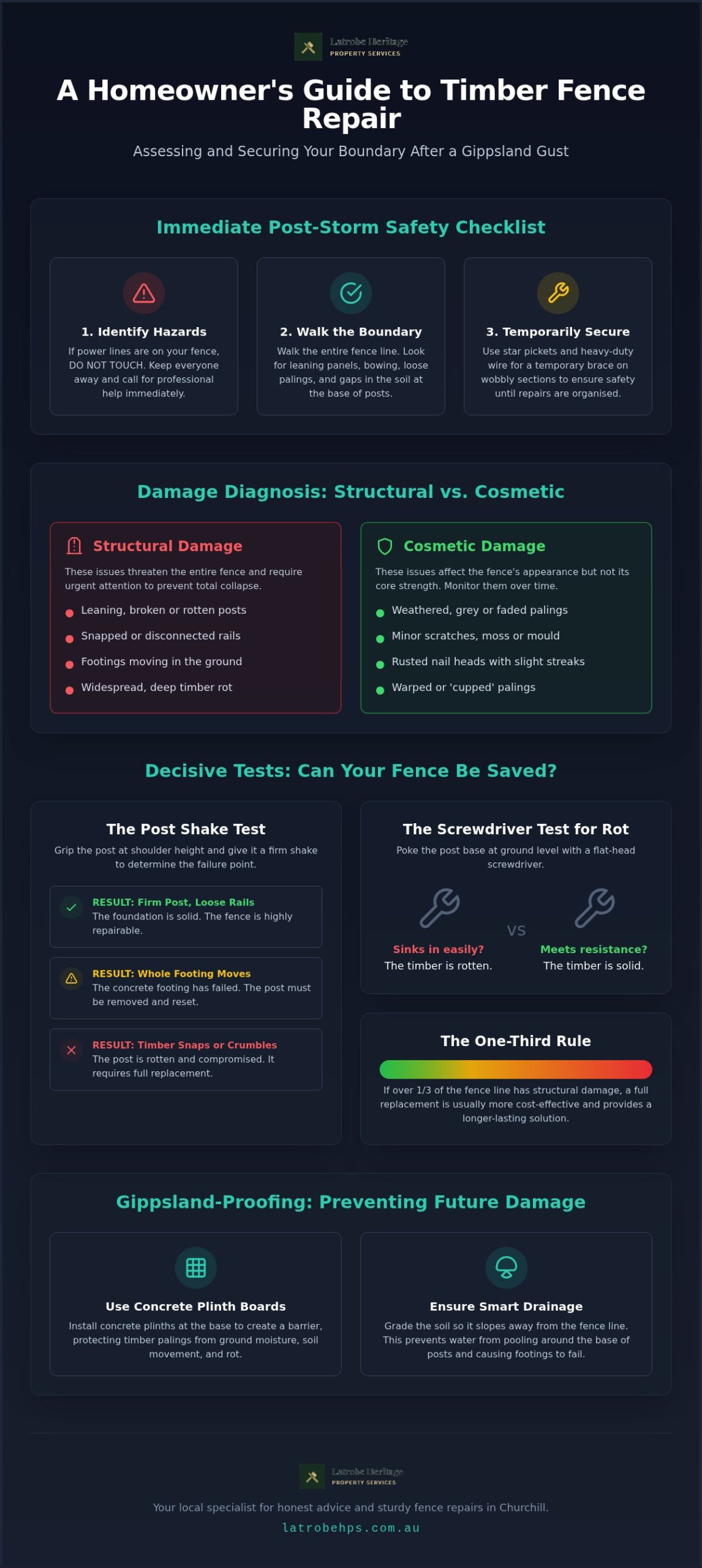
Start with the basics. Look for leaning panels or palings that have rattled loose. If a panel is bowing, the wind has put too much pressure on the rails. Next, check the base of every post. Look for “heaving” or gaps in the soil. In our local Churchill clay, wet weather followed by high wind often causes the concrete footings to shift. If the ground is mushy and the post moves when pushed, the foundation is compromised. This is a clear sign that your boundary needs attention.
- Check the joints: Look at where the rails meet the posts. Search for split timber or nails that have pulled through.
- Test the gates: A storm can twist a gate frame in seconds. Ensure it still latches securely to keep pets and kids inside.
- Scan for rot: Check the bottom of the palings. If they are soft or crumbling, the storm was just the final straw for aging timber.
Identifying Structural vs. Cosmetic Damage
Deciding on the right approach for timber fence repair Churchill involves separating the “looks” from the “strength.” Cosmetic damage involves minor scratches, weathered palings, or a bit of moss. These don’t threaten the fence’s life. Structural damage is different. Snapped rails, leaning posts, or failed foundations are emergencies. These issues lead to total collapse if left alone. Understanding wood preservation techniques is useful here; it explains why treated pine often survives these storms better than old, untreated hardwood that has succumbed to decay over time. Prioritise the skeleton of the fence. Fix the posts and rails first to keep the structure standing.
Safety First: Dealing with Fallen Lines
Safety isn’t a suggestion. If a tree has fallen and brought power lines into contact with your fence, do not touch it. Do not go near it. Electricity can travel through wet timber and wire. Keep everyone away and call for professional help immediately. In situations where large trees have collapsed, expert services like Arborcare Tree Maintenance Pty Ltd can safely handle the removal to prevent further damage. For sections that are simply wobbly, you can use star pickets and heavy-duty wire for a temporary brace. This isn’t a permanent timber fence repair Churchill solution, but it provides peace of mind until a proper fix is organised. Keep your kids and dogs clear of any section that looks ready to drop. A fallen fence is a heavy hazard. It is better to be safe than sorry.
Timber Fence Repair Churchill: Can Your Fence Be Saved?
A storm-damaged boundary looks like a write-off. It usually isn’t. You need to know if you are throwing good money after bad. We don’t guess; we test. The goal is a fence that is safe, private, and solid. It is about making a logical choice between a patch-up and a fresh start.
Evaluating the age of your timber is the first step. If the palings are grey and brittle, they won’t hold a nail. If the posts are solid, we can work with them. The “Post Shake Test” is our standard. Grab the post at shoulder height and give it a firm shake. If the timber snaps, it’s rot. If the whole footing moves, the ground has failed. If the post is firm but the rails are loose, we can save it.
If the damage is limited to a few sections, timber fence repair Churchill is a smart investment. It saves you the cost of a full boundary rebuild. However, if more than a third of the line is compromised, it is time for a change. You can read more about full replacements in our guide for fencing contractors Churchill. In cases where the damage is shared with a neighbour, you may need to issue an Urgent fencing notice to ensure the boundary stays secure without delay.
Checking for Timber Rot and Termites
Churchill’s damp soil is a breeding ground for decay. Take a flat-head screwdriver and poke the post at ground level. If it sinks in like butter, the timber is gone. Check the rail joins too. These areas trap moisture and rot from the inside out. We don’t ignore these signs. We identify them early to prevent a total collapse during the next Gippsland gale. If you need a hand assessing the damage, you can contact Dean for a straightforward opinion.
Assessing Rail and Paling Integrity
Heavy rain causes old palings to “cup” or warp. They pull away from the rails and leave gaps. Look for rusted nails that have “bled” dark streaks down the timber. This means they have lost their grip. We check if rails can be reinforced with steel brackets or if they need swapping entirely. We don’t just patch it up; we make it right. Every rail must be level, every paling must be secure, and every connection must be solid.
Step-by-Step: How to Organise Your Fence Repair
The storm has passed, and the damage is done. Now you need a plan that works. Don’t rush into a DIY fix that might fail during the next Gippsland gust. Instead, take a methodical approach to getting your boundary back in order. It starts with a camera. Document every snapped rail, every leaning post, and every loose paling. Take wide shots to show the lean of the fence and close-ups to show the condition of the timber. These photos are vital for insurance claims or for providing a clear picture to your local specialist.
Once you have your evidence, it is time to seek professional advice. When looking for timber fence repair Churchill residents can trust, look for a local who handles the work personally. You don’t want a call centre or a franchise manager. You want the person who will actually be swinging the hammer. A direct conversation with a local expert ensures you get an honest assessment of whether the structure is salvageable. Honest. Local. Reliable.
Preparing the Site for Repair
A tradesman needs room to work. Clear the area of fallen branches, debris, and any garden furniture that might be in the way. If your garden beds have become overgrown against the fence line, trim them back. This provides easy access for tools and materials. It also protects your plants from being trampled during the repair process. A clear site leads to a faster, cleaner, and more efficient job. Simple. Methodical. Productive.
Navigating the Fences Act in Victoria
Boundary fences are a shared responsibility. In Victoria, the general rule is a 50/50 cost-sharing arrangement between neighbours for a “sufficient” fence. When timber fence repair Churchill becomes necessary due to storm damage, the first step is a calm chat over the back fence. Most neighbours are reasonable, especially when safety is a concern for pets or children. Present the professional quote and discuss the timelines openly.
If a neighbour is reluctant to contribute, stay professional. Explain the legal obligations under the Fences Act and focus on the mutual benefits of a secure boundary. A solid fence adds value to both properties and ensures privacy for everyone. We don’t cut corners on advice, and we don’t ignore the importance of neighbourly relations. A job done right keeps everyone happy. Safe. Private. Solid.
Preventing Future Damage: Gippsland-Proofing Your Fence
Repairing a fence is one thing. Ensuring it stands through the next decade of Gippsland winters is another. Churchill is known for its heavy, wet clay and sudden wind gusts. These conditions punish timber. To protect your investment, you need to think about drainage. Water pooling around the base of a post is a death sentence for wood. We ensure the ground slopes away from the timber to keep the foundations dry and solid. It is a straightforward fix that adds years to the life of your boundary.
Concrete plinth boards are a game-changer for timber fence repair Churchill projects. These boards sit at the very bottom of the fence, acting as a structural barrier between the damp soil and your timber palings. They stop the wood from soaking up ground moisture like a sponge. It is a simple, effective way to prevent rot before it starts. For those managing larger properties or paddocks, our guide on rural fencing Latrobe Valley offers deeper insights into securing wider boundaries against the elements. Safe. Private. Solid.
Choosing the Right Materials for Churchill
Not all timber is created equal. In our local soil, H4-treated pine is often the most reliable choice for posts because of its high resistance to decay and termites. Hardwood is strong, but it can be prone to warping if not handled with care. We always use galvanised nails. Standard steel nails rust and lose their grip in the Gippsland damp, leading to loose palings during a storm. For high-wind areas, we recommend using 125mm x 75mm posts to provide a broader anchor in the clay. Sturdy. Tested. Reliable.
Routine Maintenance for Longevity
Maintenance is not a chore; it is an insurance policy. Keep grass and mulch away from the base of your posts. Long grass traps moisture against the timber and invites fungal growth. We suggest a quick walk-around every spring to look for loose fasteners or signs of soil movement. If you notice a paling starting to rattle, fix it before the summer storms arrive. A well-maintained fence can last two decades. A neglected one might fail in five. If you want a boundary built to last, book a site assessment with Dean to get your property maintenance on track.
Why Choose a Local Tradesman for Churchill Fence Repairs?
When you need timber fence repair Churchill, you don’t want a faceless directory or a call centre in another city. You want someone who lives down the road. You want a tradesman who knows the local wind patterns and the way the Churchill clay shifts after a heavy Gippsland downpour. Choosing a local means choosing accountability. If there is a problem, you know exactly who to call. You deal with Dean from the first phone call to the final nail. No middlemen. No excuses. Just a man of his word.
Large franchises often rush jobs to meet corporate targets. We don’t. We prioritize quality over speed every single time. A fence that is slapped together in an afternoon will only fail again during the next storm. We take the time to set posts properly, align rails accurately, and secure palings firmly. It is about old-school craftsmanship that stands the test of time. Reliable. Thorough. Honest.
The Value of Personal Accountability
There is a massive difference between a crew of subcontractors and a one-man operation. When Dean handles your timber fence repair Churchill, he takes personal responsibility for the result. No part of the job is passed off to someone less experienced. This “one man, one job” approach ensures a higher standard of work and clear communication throughout the process. You get the peace of mind that comes with a fully insured professional who treats your property with respect. Supporting a local business keeps the Latrobe Valley strong. It ensures that skills and service stay right here in our community. Local pride. Personal service. Proven results.
Getting Your Free Quote Today
Getting your boundary back in order shouldn’t be a stressful process. We make it straightforward. When you book a site visit, we show up on time and provide a clear, written quote. There are no hidden fees and no subcontractor markups. We look at the damage, explain the fix, and give you a fair price for a job done right. Whether you are in the heart of Churchill or out towards Traralgon, we are ready to help you secure your property. Don’t leave your privacy and safety to chance. Take the first step toward a solid boundary and Contact Latrobe Heritage Property Services for a professional assessment today. Honest. Insured. Local.
Secure Your Boundary for the Long Haul
A storm-damaged fence doesn’t have to be a permanent headache. By following a methodical assessment and prioritising structural integrity, you can restore your property’s safety and privacy without the unnecessary cost of a total rebuild. Remember the essentials: check your post foundations, use concrete plinth boards to fight the Churchill damp, and always choose materials that can withstand Gippsland winds. It is about doing the job right the first time so you don’t have to do it again next winter.
You deserve a boundary that is safe, private, and solid. When you need timber fence repair Churchill, you want a man of his word who handles the work himself. No subcontractors. No call centres. No hidden fees. Dean is locally owned and operated in the Latrobe Valley and is fully insured for your peace of mind. He personally handles every quote and every repair to ensure old-school craftsmanship on every property.
Get a free, honest quote from Dean for your timber fence repair and get your home back to its best. Your property is in good hands.
Frequently Asked Questions
Is storm damage to my fence covered by home insurance?
Most home and contents insurance policies in Victoria cover storm damage to boundary fences. You should check your specific Product Disclosure Statement (PDS) to confirm your level of cover. If the fence was already in a state of decay or poorly maintained before the storm, the insurer might reject the claim. Always take clear photos of the damage immediately to support your application.
How much does it cost to repair a timber fence in Churchill?
The total cost depends on the extent of the damage and the condition of your existing materials. A simple rail replacement is a different job to digging out failed concrete footings and resetting posts in heavy clay. We provide a fixed, transparent quote after a site visit so you know exactly what the job involves. There are no hidden fees or subcontractor markups.
Can I repair just one leaning fence post?
You can certainly repair a single post if the rest of the fence line is healthy and upright. We often reinforce individual posts or replace them entirely without needing to pull down the whole boundary. However, if one post has rotted at the base, it is likely that others are in a similar condition. We check the entire line to ensure a single fix is a sound investment.
What is the best timber for a fence in the Latrobe Valley?
H4 treated pine is the most reliable choice for our local Gippsland conditions. It is specifically rated for ground contact, which is vital for Churchill’s damp, heavy soils. While hardwood is a traditional option, modern treated pine offers superior resistance to rot and termites over the long term. It stays straight, holds fasteners well, and handles the local weather without warping or splitting.
How long does a typical timber fence repair take?
Most small to medium repairs are completed within a single day. Larger projects that involve replacing multiple posts or long sections of palings might stretch into a second day. We don’t rush the process, but we don’t waste time either. Because Dean handles the work personally, you don’t have to wait for subcontractors or separate delivery crews to arrive. The work is steady and methodical.
Do I need my neighbour’s permission to repair a shared fence?
You should always talk to your neighbour before starting work on a shared boundary. Under the Fences Act in Victoria, neighbours are generally expected to share the cost of a sufficient fence 50/50. Getting an agreement in writing before the timber fence repair Churchill begins prevents misunderstandings. It is the best way to keep things fair while ensuring your property remains secure and private.
What should I do if my fence is leaning after a storm?
Check for immediate hazards like fallen power lines or loose panels that could drop. If it is safe, you can temporarily prop the section up with a sturdy timber brace or a star picket. Don’t try to push a heavy fence back into place by yourself, as the weight can be dangerous. Contact a local specialist to see if the posts have snapped or simply shifted in the wet soil.
Can Dean from Latrobe Heritage Property Services help with gate repairs too?
Yes, gate repairs are a standard part of the service. Storms often twist frames or pull hinges out of weathered timber. We realign frames, replace failed hardware, and ensure your property is secure for pets and children. It is a complete, professional service from start to finish. No shortcuts. No fuss. Just a solid result for your timber fence repair Churchill project.